
How can councils leverage contactless technology?
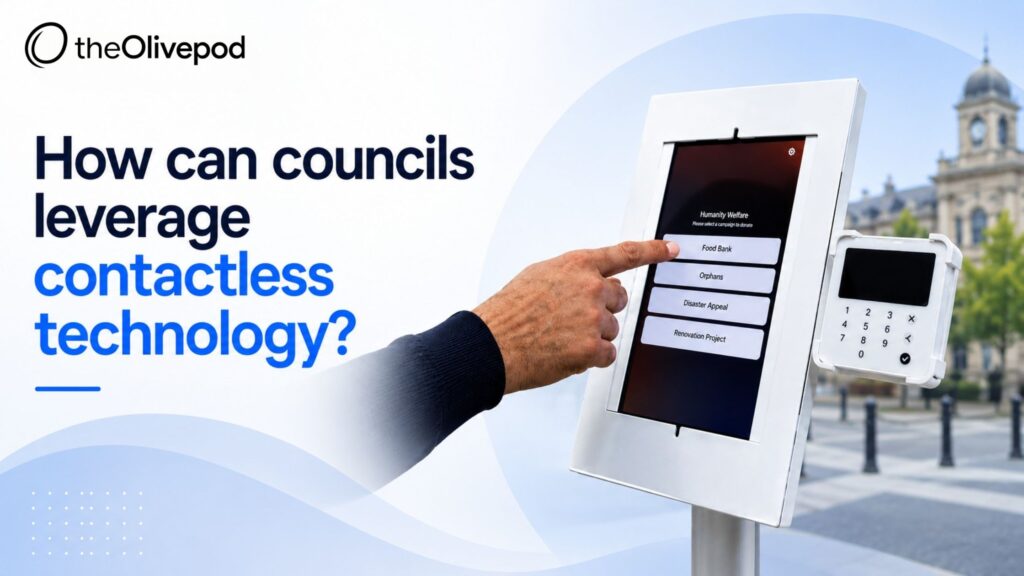
Contactless technology helps councils improve fundraising efficiency, reduce operational complexity and deliver more accessible services to their communities. Donation terminals are modernising council fundraising. They also make it easier for residents to support local causes and public initiatives.
What advantages does contactless technology offer councils?
Contactless payment solutions help councils modernise community fundraising by making it easier for residents to support local initiatives. These systems provide a convenient alternative to cash collections while helping councils improve operational efficiency.
The main advantages include:
Better community engagement
Residents can support local causes instantly using contactless cards, smartphones and digital wallets. This makes it easier for people to contribute during community events and public initiatives.
Improved financial management
Digital payment systems create accurate records of donations, making it easier for councils to monitor income, prepare reports and maintain clear financial oversight.
Greater operational efficiency
By reducing reliance on cash collection, councils can spend less time managing physical donations, counting money and completing manual reconciliation processes.
Wider accessibility
Multiple payment options include contactless cards, mobile wallets and QR codes. As a result, more residents can participate using their preferred payment method.
Councils can deploy donation terminals across community facilities, events and public spaces. This allows residents to contribute wherever they engage with local services. Their ability to integrate with existing council activities makes them a practical addition to modern fundraising operations.
How are councils successfully deploying donation terminals across communities?
Councils can deploy contactless donation technology across a range of locations and activities, helping communities contribute easily while supporting local fundraising goals. These systems can support a wide range of community initiatives, from emergency response and environmental projects to social support programmes.
Common ways councils use donation terminals include:
- Community fundraising events: Councils install donation terminals at charity events, community gatherings and public celebrations. This encourages spontaneous giving, even when residents do not carry cash.
- Emergency response and crisis relief: During emergencies, councils can deploy mobile donation points. As a result, they can collect financial support quickly for recovery efforts.
- Environmental and sustainability initiatives: Councils can use terminals at conservation projects and sustainability programmes to encourage public support.
- Social assistance and welfare measures: Councils can use donation terminals within outreach programmes supporting vulnerable groups, homelessness prevention and food security activities.
- Public amenities and cultural programmes: Councils place donation terminals in libraries, leisure centres, museums, visitor centres and public spaces to support community projects and cultural initiatives.
Their flexibility allows councils to integrate contactless fundraising into existing services and community programmes, from conservation projects and youth initiatives to social support services.
Why should councils prioritise contactless implementation now?
Councils are under increasing pressure to modernise operations, adopt suitable technology and respond to evolving resident expectations. Implementing contactless infrastructure can help improve service delivery while creating more efficient and accessible ways for communities to engage.
Key reasons why councils should implement contactless infrastructure include:
- Changing payment habits: More residents now prefer contactless cards and digital wallets, making cashless payment options increasingly important for public services.
- Efficiency in operations: Contactless systems allow councils to modernise payment processes and redirect staff time towards higher-value community services.
- Better data and decision-making: Contactless systems provide transaction data that helps councils understand community priorities, donation trends and future funding needs.
- Regulatory compliance: Digital payment systems provide clear audit trails and transaction records that support financial reporting and accountability.
- Improved public perception: Modern payment technology demonstrates a commitment to accessibility, convenience and innovation, helping councils build trust with residents and stakeholders.
As digital payments become more common in everyday life, residents increasingly expect convenient ways to support public initiatives.Councils that provide modern giving options will be better positioned to increase community participation. As fewer people carry cash, delaying the adoption of digital donation technology may result in missed fundraising opportunities.
Final words: Building modern, accessible councils through contactless technology
Contactless technology is becoming a valuable tool for councils looking to improve community engagement and modernise fundraising. Digital donation terminals provide a simple and convenient way for residents to support local initiatives while helping councils adapt to changing expectations around payments and public services.
By embracing digital giving solutions, councils can create more connected communities. They can also build fundraising programmes that are easier to manage, more accessible and ready for the future.
Frequently asked questions about contactless donations for councils
Q: Are donation terminals secure for council use?
A: Most reputable payment providers use encryption and comply with PCI DSS security standards, which helps protect transactions and supports compliance with relevant data protection requirements.
Q: What payment methods do council donation terminals accept?
A: Depending on the solution and payment provider, donation terminals typically support contactless debit and credit cards, as well as digital wallets such as Apple Pay and Google Pay.
Q: Can small parish councils benefit from donation terminals?
A: Yes. Scalable donation terminal solutions allow smaller parish councils to improve community engagement and simplify fundraising management.