
How Libraries & Leisure Centres Can Generate Donation Revenue
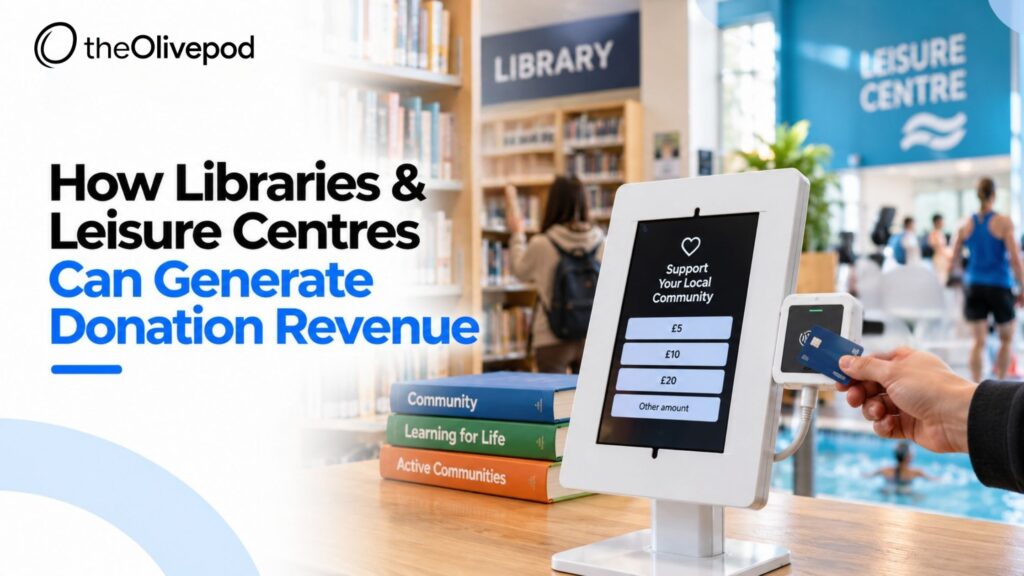
Libraries and leisure centres are increasingly exploring donation revenue as a way to supplement stretched public budgets and help fund additional services for their communities.
With thousands of people passing through many of these venues each month, they are well placed to offer simple, low-friction giving opportunities that don’t interfere with the visitor experience. Contactless donation points, QR codes and membership add-ons can make it easier to turn everyday visits into meaningful fundraising.
Why should libraries and leisure centres consider donations?
Libraries and leisure services have faced increasing pressure on public funding in recent years, leading many to explore alternative sources of income to maintain and improve the programmes and facilities they provide.
Council budgets may not always stretch to additional services such as children’s activities, equipment upgrades or improvements to facilities.
When asked at the right time and in the right way, visitors may be happy to contribute a small amount towards a service or facility they value.
Donations can also help fund specific, visible improvements that benefit the local community and give visitors a clear reason to support a campaign.
Developing donation revenue can also reduce reliance on a single source of funding, helping services become more financially resilient.
Although individual donations may be small, regular contributions can add up to a meaningful amount over the course of a year, particularly at busy venues with consistent footfall.
What donation methods work best in these settings?
Libraries and leisure centres have a different relationship with their visitors than shops or traditional fundraising organisations. Donation methods should therefore be simple, optional and never feel intrusive.
Contactless donation points
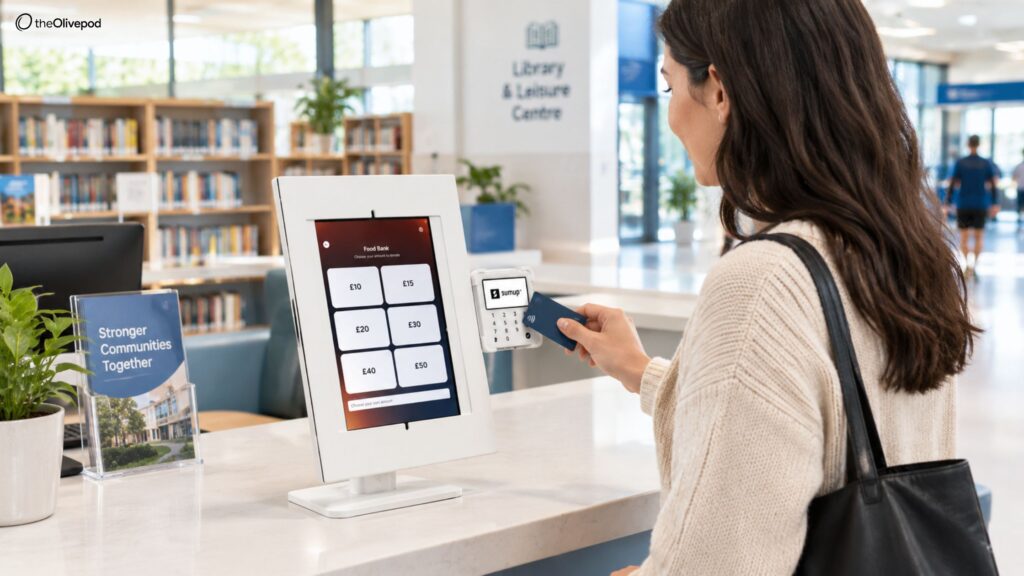
Small contactless donation kiosks at reception desks, checkout areas or exits allow visitors to donate in just a few seconds without needing to carry cash.
Suggested amounts such as £1, £2 or £5 can make the decision to give quicker and simpler. Visitors can donate using a contactless card, phone or other supported payment method, and donation points can be placed in busy areas such as entrances, reception desks and exits.
QR code giving
Placing a QR code on posters, receipts, noticeboards or other printed materials gives visitors the option to donate using their own phone at a time that suits them.
This can work particularly well for people who prefer to make a donation independently. QR codes can also link directly to a specific appeal, such as funding a new children’s reading area, community programme or piece of leisure equipment.
Campaigns can be updated for seasonal appeals or specific fundraising goals without requiring additional donation hardware.
Round-up schemes
For leisure centres with cafés, shops or other payment points, giving customers the option to round up a purchase can provide another simple way to collect small, regular donations.
The amount involved may be small for each visitor, but over time these contributions can add up.
How can membership and events add to donation revenue?
In addition to one-off donations, libraries and leisure centres can introduce donation opportunities through services and activities that visitors already use.
Venues could offer an optional donation during membership sign-up or renewal. They could organise sponsored fitness challenges or reading marathons. Community events, workshops and book sales can also include a fundraising element.
Local businesses may also be interested in sponsoring particular facilities, activities or community programmes.
These approaches can be effective because the fundraising is connected to something the visitor is already participating in or cares about, rather than simply asking for money without a clear purpose.
What role does technology play in growing donations?
Modern donation technology can make it easier for libraries and leisure centres to monitor, manage and expand their fundraising without creating significant additional administration.
A digital dashboard can give an overview of donations across campaigns or locations. This helps organisations see how their fundraising is performing.
Automated receipts and thank-you messages can improve the donor experience. Donation patterns can also show which campaigns, locations or times get the strongest response.
Where appropriate, donation systems may also integrate with existing CRM or management systems, helping to reduce duplicate administration.
Technology can therefore help smaller venues run organised, professional campaigns. They won’t need a dedicated fundraising team.
How should venues communicate their fundraising goals?
Visitors are more likely to understand the value of donating when they know exactly what their contribution will help fund.
Clear signage can explain a campaign’s purpose. Try messages such as “Help us refurbish the children’s library” or “Help us fund new community fitness equipment.”
Venues can share regular updates on progress towards a goal. Once the project is complete, show visitors what their donations achieved.
Visible results show the impact of donations. Examples include new equipment, improved facilities, refurbished spaces or extra community activities.
Make staff aware of current campaigns. They can then mention them naturally, without pressuring visitors to give.
Transparency builds trust. When visitors can see where their money is going and the difference their contribution has made, they may be more willing to support future campaigns.
FAQs
Q1. Will asking for donations deter people from using libraries and leisure centres?
Not if it is handled appropriately. Donation opportunities should be optional, clearly explained and low pressure. Visitors should always feel free to use the service without being expected to make a donation.
Q2. How much can a typical venue raise in donations?
There is no single figure, as the amount will depend on factors such as visitor numbers, the type of venue, the fundraising campaign and how donation opportunities are presented.
However, even relatively small contributions from a proportion of regular visitors can add up to a meaningful amount over the course of a year.
Q3. Do we need special equipment to start raising donations?
Not necessarily. A venue could begin with something as simple as a QR code linked to an online donation page or a single contactless donation terminal, then expand its fundraising setup as demand grows.
Q4. Can donation revenue be linked to specific projects instead of general funds?
Yes. In many cases, giving visitors a clear fundraising goal can make the purpose of the campaign easier to understand.
For example, donations could support a new children’s reading area, additional community activities, upgraded leisure equipment or improvements to a particular facility.
Final thoughts
Libraries and leisure centres don’t necessarily need large fundraising teams or complicated systems to generate additional donation revenue.
With the right combination of contactless giving, QR codes, membership opportunities and clear communication, everyday visits can create a steady source of additional funding that supports facilities, activities and services for the local community.
Ready to introduce donation revenue at your venue?
If your library or leisure centre is exploring simple and effective ways to collect donations, contact theOlivepod to find out how our contactless donation kiosks, QR code giving and online donation tools can support your venue and fundraising goals.