
How animal shelters and wildlife charities can raise more with Tap to Donate
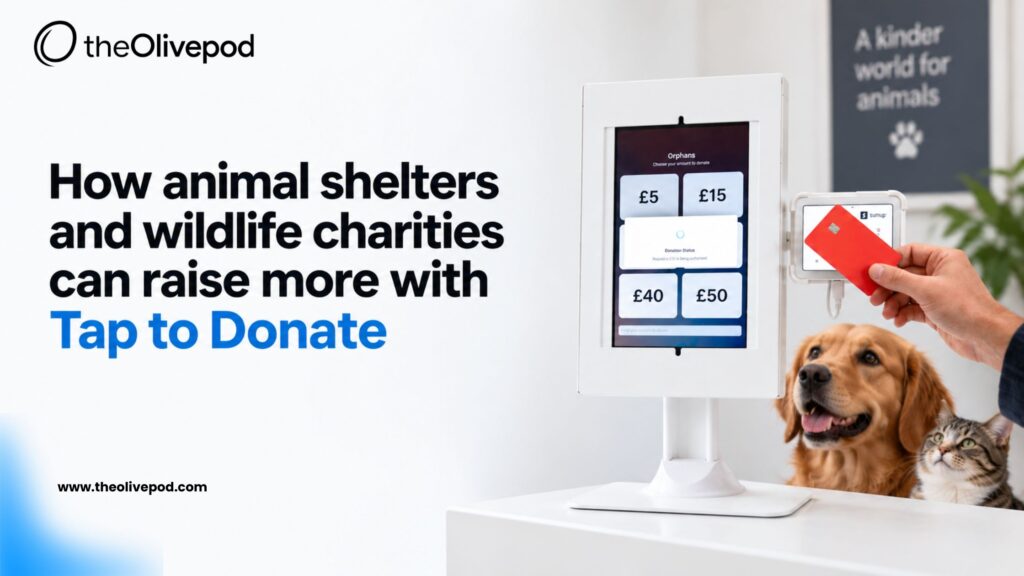
Animal shelters and wildlife charities have something many causes would love to have, an immediate emotional connection with supporters.
A visitor might meet a rescued dog, watch an owl being released or read the story of a cat rescued from a motorway verge. The emotional connection happens immediately. The challenge is turning that moment of goodwill into a donation.
By the time a supporter gets home and remembers that they wanted to donate, the moment has passed.
Tap to donate technology helps bridge that gap by allowing people to donate at the exact moment they feel inspired to help.
Why are animal charities losing donations at the point of impact?
Rehoming centres, wildlife hospitals, visitor sites and sanctuaries create powerful moments of connection every day. However, a conventional donation tin on a reception desk only captures a small part of that goodwill.
The reason is simple. Fewer people carry cash than they used to.
A family can arrive at a rescue centre with a card, pay for refreshments with their phone and still reach the donation box without anything to give. They may want to donate. They simply are not carrying cash.
Cash also creates extra work for charities. Donation tins need to be emptied, coins counted, money banked and totals recorded. For smaller shelters that rely heavily on volunteers, this is time that could be spent feeding, cleaning and caring for animals.
Donation tins can also be a security risk in buildings that are open to the public.
What is ‘tap to donate’ and how does it work?
Tap to donate allows a supporter to make a donation by tapping a bank card, phone or smartwatch on a secure payment terminal.
They choose a donation amount, tap to pay and the donation is processed in seconds. There is no cash to handle and no need for a queue.
The technology can be used in several fundraising scenarios.
Fixed donation kiosks can be placed in reception areas, near kennels, along aviary walkways and in visitor centres.
Mobile card readers can be taken to fetes, dog shows, adoption days, country shows and supermarket collections by staff and volunteers.
QR codes on enclosure signage, adoption posters, vehicle livery and leaflets can turn almost any surface into a donation point without requiring additional hardware.
Online giving pages and donation widgets can capture donations from social appeals, rescue stories and other online campaigns.
Many charities combine several of these options so supporters can donate wherever they encounter the organisation.
Where should shelters place donation terminals for the best results?
Placement matters. High footfall combined with a strong emotional connection can create a natural opportunity to ask for a donation.
Next to individual animals
A terminal next to the enclosure of a particular animal can be more personal than a generic donation point at reception.
Instead of simply asking for support, the signage can explain the animal’s story and show what a donation could help provide.
People respond to stories about individual animals because they can see exactly what their donation could help.
At the exit
Exit points can be an effective place to ask for a donation because visitors have already seen the work of the organisation and experienced its impact.
A simple message such as “Enjoyed your visit? Help us care for the animals you have met today” can turn that experience into a donation.
In veterinary and treatment areas
Wildlife hospitals with viewing windows can place donation terminals where visitors can see animals receiving treatment.
Seeing the work taking place can make the need for support more tangible.
At adoption and rehoming desks
Adoption is another natural opportunity to invite a donation or introduce a sponsorship programme.
A new owner may want to make a contribution to help another animal receive the same care as the one they are taking home.
At events and mobile collections
Country shows, dog walks, school visits and community events all create fundraising opportunities.
Mobile card readers allow staff and volunteers to collect donations without relying on buckets, floats or cash handling.
Does tap to donate raise more than a collection tin?
Contactless giving can increase the value of individual donations by making it easier for supporters to choose a specific amount.
With a collection tin, someone may simply give whatever loose change they have. With a digital donation terminal, they can choose a preset amount such as £3, £5, £10 or £20.
The important difference is convenience. A supporter does not need to have cash with them to take part.
The donation amount can also be linked to a specific need.
For example, a charity could explain what £5, £10 or £25 could help provide. This turns a general feeling of sympathy into a clear action.
These messages can be tailored to different locations and campaigns. A wildlife hospital might highlight treatment costs, while a rehoming centre could focus on food, vaccinations or veterinary care.
How can shelters turn one off gifts into regular income?
One off donations are valuable, but reliable monthly income allows shelters to plan ahead for veterinary costs, staffing and animal care.
Tap to donate can provide an opportunity to introduce regular giving while the supporter is still engaged with the charity.
Sponsorship programmes can work particularly well for animal charities. After meeting an animal or hearing its story, a visitor can be invited to sponsor that animal with a monthly donation and receive updates about its progress.
A single visit can therefore become the start of a longer relationship with the charity.
What about Gift Aid on animal charity donations?
Gift Aid allows eligible UK charities to claim an extra 25p from HMRC for every £1 donated by an eligible UK taxpayer, provided the relevant Gift Aid requirements are met.
The process is different for anonymous cash donations and digital giving.
Eligible charities can use the Gift Aid Small Donations Scheme to claim a top up on qualifying small cash and contactless donations without needing an individual Gift Aid declaration for each donation. The scheme has specific eligibility and donation limits, so charities should check the current HMRC rules.
For larger donations, charities generally need the appropriate Gift Aid declaration and donor information.
Online donation journeys can make it easier to capture the information needed for Gift Aid where applicable. This can help charities maximise the income they are able to reclaim from eligible donations.
For animal charities receiving significant volumes of small donations, getting the Gift Aid process right can make a meaningful difference to fundraising income.
What should charities check before choosing a tap to donate system?
Charities should look at the total cost rather than focusing only on the price of the hardware.
Consider the hardware cost, monthly subscription and transaction fees. When average donations are relatively small, transaction fees can have a noticeable effect on the amount the charity keeps.
It is also important to check how the provider handles payment security, data protection and compliance requirements. Charities should understand which responsibilities sit with them and which are handled by the payment provider.
The system should support the payment methods donors are likely to use, including contactless bank cards and mobile wallets such as Apple Pay and Google Pay, where supported.
Outdoor and partially outdoor locations are common at animal charities, so durability and connectivity are important considerations.
The system should be simple enough for staff and volunteers to use without extensive training. Remote campaign management can also be useful when charities need to change donation amounts or messages for seasonal appeals, emergency rescues and winter feeding campaigns.
For smaller shelters testing contactless fundraising for the first time, flexible contracts can make it easier to try the approach without committing to a long term arrangement.
Conclusion
Animal shelters and wildlife charities create powerful emotional connections every day. Tap to donate makes it easier for supporters to act on that feeling while it is still fresh.
Contactless giving can make donations more convenient, reduce cash handling and administration, create opportunities for different donation amounts and support longer term fundraising relationships.
TheOlivepod brings fixed donation kiosks, mobile fundraising, QR code donations, online giving and website donation widgets together in one platform. Charities can create branded campaigns, update them remotely and track contactless, QR and online donations through a central dashboard.
For animal shelters and wildlife charities, that means more opportunities to turn a moment of connection into practical support for animals.
FAQs
Can animal shelters accept contactless donations?
Yes. Animal shelters can use contactless donation terminals to accept donations by bank card and supported mobile wallets. theOlivepod offers fixed donation stations as well as mobile fundraising options for events and community collections.
Can wildlife charities use tap to donate at outdoor events?
Yes. Mobile contactless fundraising allows volunteers to collect donations at events, dog walks, country shows and other temporary fundraising activities without relying on cash.
Can animal charities collect Gift Aid with contactless donations?
Yes, eligible contactless donations can qualify for Gift Aid, provided the relevant HMRC requirements are met. theOlivepod supports Gift Aid collection for eligible donations.
Can supporters make monthly donations?
Yes. Online giving through theOlivepod supports both one off and recurring donations through Stripe, allowing charities to encourage supporters to make regular monthly gifts.
Can charities use QR codes as well as contactless terminals?
Yes. theOlivepod provides QR code donation options alongside contactless terminals, mobile fundraising and online giving. Charities can use QR codes on posters, leaflets, signage and other materials to give supporters another way to donate.