
How Homeless Shelters Are Modernising In-Person Donation Collection
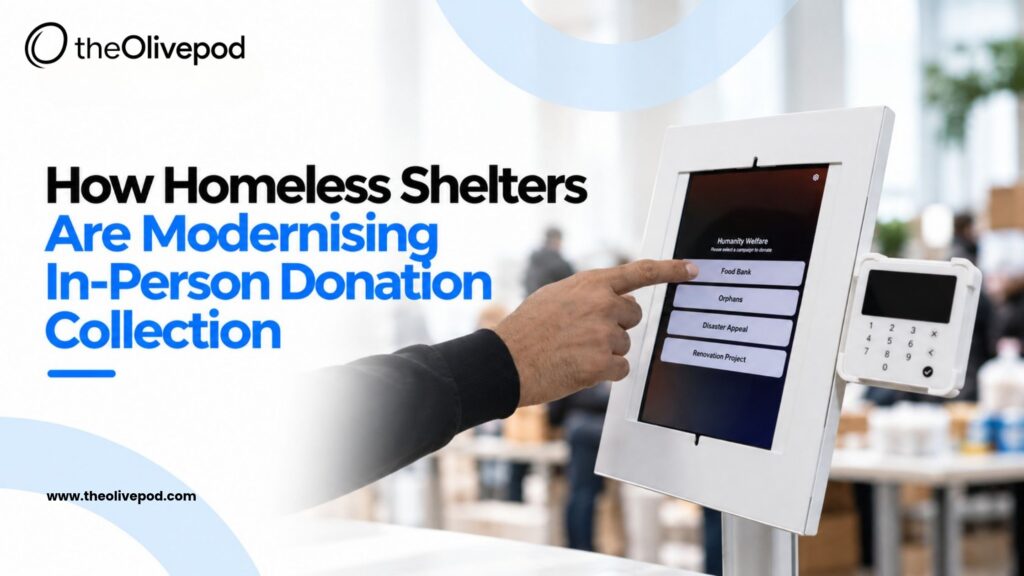
Homeless shelters across the UK are under constant pressure. Demand rises every winter, and the small army of volunteers who keep services running are already stretched thin. At the same time, the way the public gives has changed. Fewer people carry cash, and a collection tin at reception simply doesn’t help a donor standing in front of it with only a card in their pocket.
Shelters that modernise how they handle in-person donation collection can make it easier for people to give, while reducing the strain on staff and volunteers.
Why are shelters losing donations at the point of collection?
Anyone who’s spent time in or around a shelter knows the moment: a visitor, volunteer or passer-by feels moved to give something on the spot, reaches for cash, and finds they have none. It isn’t reluctance. It’s friction. And that friction adds up.
Cash-only collection points also create hidden costs for the shelter itself.
Someone has to count, bag and bank whatever cash comes in, taking time away from frontline work. Collection tins left in busy, publicly accessible spaces can also carry a security risk. There’s no easy way to say thank you, issue a confirmation, or stay in touch with the donor. A valuable donation opportunity can be lost entirely if the person simply doesn’t have any cash.
For shelters trying to stretch every pound further, these aren’t small inefficiencies. They can mean donations that never happen.
What does a modernised donation collection setup look like?
Modernising doesn’t mean a complete overhaul. It means giving donors a way to give that matches how they already pay for everything else.
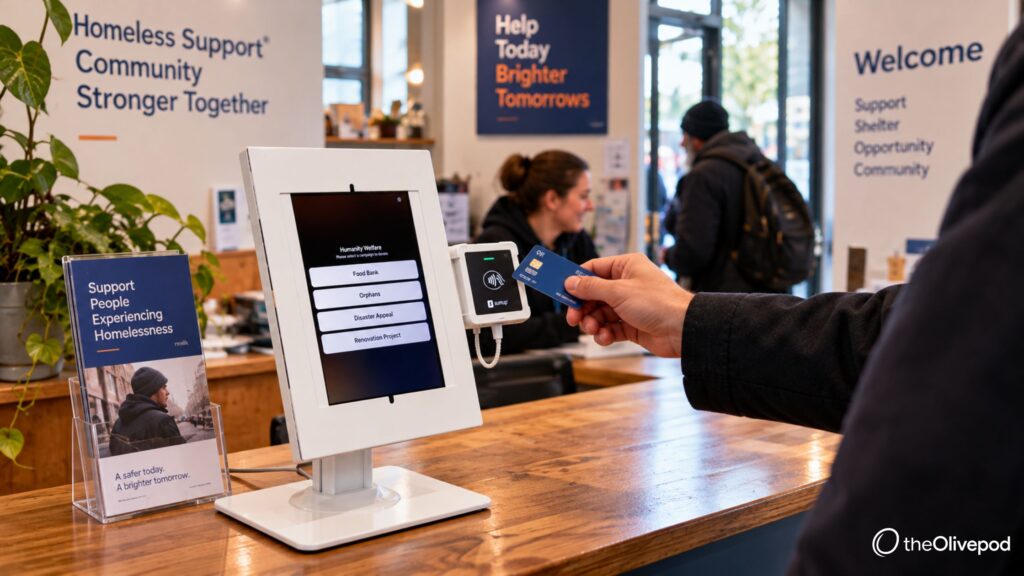
Contactless donation kiosks at reception or near the entrance let a donor tap a card, phone or watch and give an amount of their choice in seconds. There’s no need for cash, and volunteers don’t need to process the donation manually.
Mobile card readers can go with staff and volunteers to outreach points, street collections and community events, so no location has to depend on donors carrying cash.
QR codes on posters, leaflets and collection boxes let a passer-by give from their own phone without any additional hardware. This can be particularly useful for shelters with limited footfall through a physical reception.
Online giving pages capture donations from people who hear about the shelter’s work through social media, local press or a shared appeal, without ever visiting in person.
Together, these options give a shelter multiple ways to capture a donation at the moment someone feels moved to give, rather than relying on a single collection tin at the front desk.
Where should shelters place donation points for the best results?
Placement matters just as much as the technology itself. The strongest locations combine good footfall with a moment when someone is already thinking about the shelter’s work.
Reception and entrance areas are ideal locations. Visitors, volunteers and delivery drivers pass through these spaces. They may also have seen the shelter’s work up close.
Place terminals near information boards or impact displays. Donors can read what their contribution could fund. They can then donate immediately.
At outreach events and street collections, mobile card readers offer flexibility. Staff can collect donations wherever they work, both inside and outside the building.
Printed appeals offer another opportunity. Add QR codes to leaflets, posters and collection boxes. Donors can then give from their phones without finding a terminal.
Does contactless giving raise more than a collection tin?
Contactless giving can help shelters increase both the number and value of donations by making it easier for people to give.
Someone dropping coins into a collection tin is limited by whatever loose change they’re carrying. Someone using a contactless donation terminal can choose from suggested amounts or enter a donation amount without being limited by the cash in their pocket.
The potential donor pool grows too. A collection tin only works for people who happen to be carrying cash that day. A contactless terminal can accept donations from people using a card, phone or watch.
Specific, concrete asks can also make the decision to give easier. Telling a donor that £5 could help provide a hot meal, or £10 could contribute towards emergency bedding, turns a general wish to help into an easy, immediate decision.
How can shelters turn one-off donations into ongoing support?
A single gift is always welcome, but reliable monthly income can help a shelter plan its budget for food, bedding, staffing and other essential costs months ahead rather than reacting week by week.
Digital giving can make it easier to invite someone who has just made a one-off donation to consider setting up a small recurring donation, while the reason that inspired them to give is still fresh in their mind.
What about Gift Aid on shelter donations?
Gift Aid lets UK charities reclaim 25p for every £1 donated by an eligible UK taxpayer. However, claiming Gift Aid on anonymous cash donations can be more difficult because the charity may not have the donor information and declaration needed for a standard Gift Aid claim.
Digital donation platforms can build Gift Aid capture into the giving experience itself. Donors can be prompted to confirm their eligibility and provide the information required for a Gift Aid declaration, with the relevant details stored securely for the charity.
For a shelter that currently misses opportunities to claim Gift Aid on eligible donations, improving the Gift Aid process can help make each qualifying donation go further.
What should shelters check before choosing a system?
Look at the full cost of the system, including hardware, monthly subscriptions and transaction fees, rather than focusing only on the headline price. Transaction costs can be particularly important when a shelter receives a high volume of smaller donations.
Make sure the provider follows appropriate GDPR and payment security requirements, including PCI DSS where applicable, and check which payment methods are supported, such as contactless cards, Apple Pay and Google Pay.
Ease of use matters more here than almost anywhere else. Shelter volunteers are often stretched thin and juggling several roles at once, so any system should be straightforward to operate with minimal training.
Remote campaign management is valuable too. Being able to update messaging across multiple devices from one dashboard means a winter appeal or emergency campaign can be launched quickly without having to visit each location individually.
Finally, look for flexible contract options where possible, so smaller shelters can trial the approach before deciding whether to expand it further.
FAQs
Q1. Do small, community-run shelters need expensive technology to start collecting contactless donations?
No. A single portable card reader or a printed QR code linking to an online donation page can be enough to get started, with the option to add more terminals as needs grow.
Q2. Does contactless giving replace the personal connection with donors?
No. It removes friction from the process of giving, not the relationship with the donor. Volunteers can focus more of their time on welcoming supporters and helping the people who use the shelter, rather than handling and counting cash.
Q3. Is it safe to collect donor information through a contactless donation system?
It can be, provided the platform handles personal data appropriately, follows GDPR requirements and uses suitable payment security standards such as PCI DSS where applicable. Donors should also be told clearly how their personal information will be used, for example to manage Gift Aid or provide relevant donation communications.
Q4. Can one system handle both one-off and recurring donations?
Yes. Many digital donation platforms can support both one-off donations and recurring giving, although the exact options available will depend on the platform and payment method being used.
Final thoughts
Modernising in-person donation collection isn’t about making giving feel less human. It’s about removing the friction that can stop a willing donor from giving at all.
With contactless donation kiosks, mobile card readers, QR codes and online giving working together, homeless shelters can meet donors where they are, make the most of moments of goodwill, and build more reliable funding for the people who need their support.
Ready to make your shelter’s donation process simpler?
If your organisation wants to modernise how it collects donations, contact theOlivepod to find out how our contactless donation kiosks, mobile card readers, QR codes and online giving tools can support your shelter’s next campaign.