
Contactless fundraising for NHS charities and hospital trusts
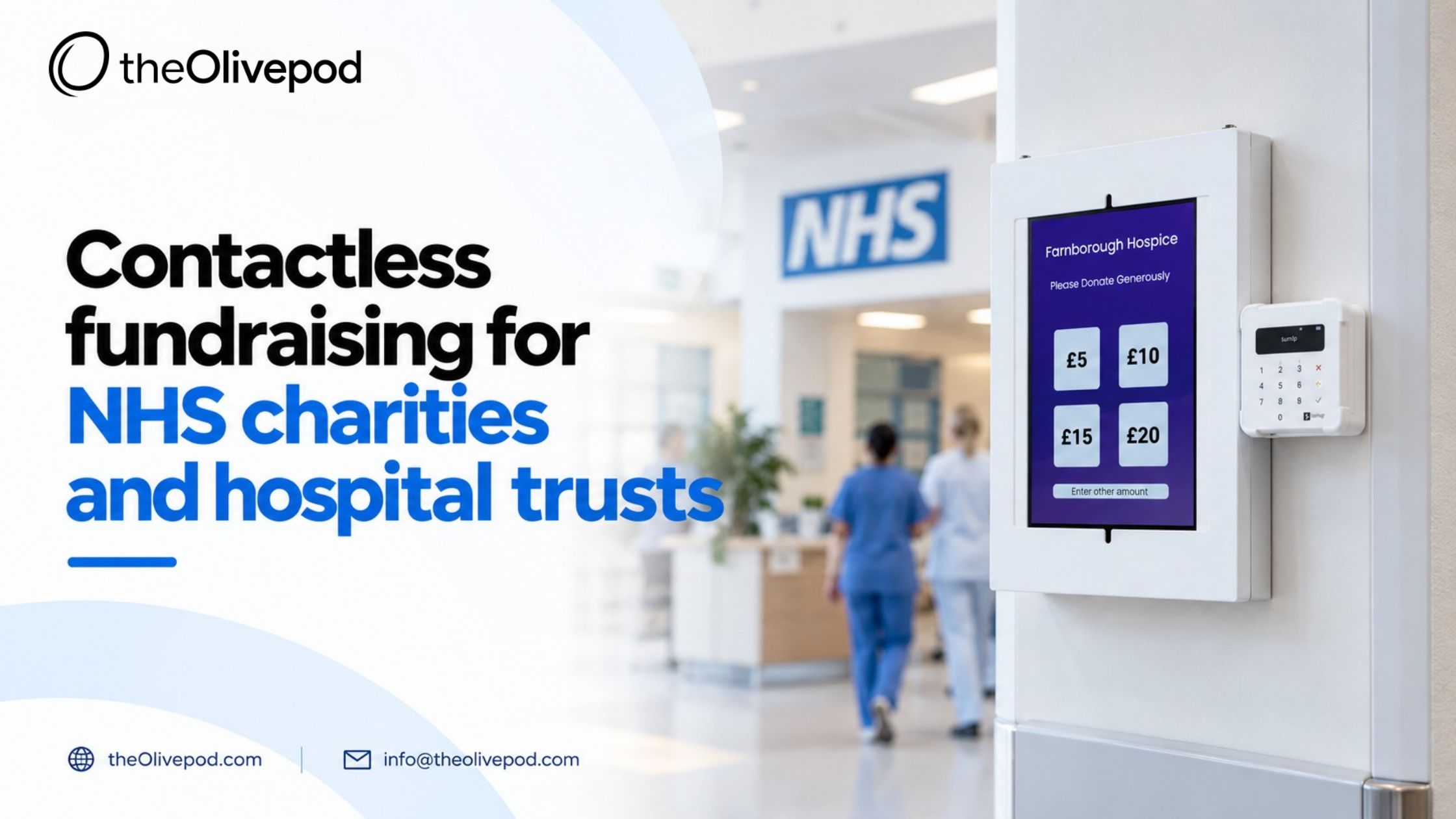
Contactless fundraising is becoming increasingly important for NHS charities and hospital charities as fewer people carry cash and more people use cards and mobile payments.
Hospitals are busy environments. Visitors may be moving between appointments, spending time with patients or taking a short break between other commitments. Fundraising teams therefore need donation methods that are quick, simple and easy to use.
Without contactless options, some hospital visitors may miss the opportunity to donate simply because they do not have cash with them.
NHS charity donations can support patients, families and staff, as well as equipment, facilities, research and other areas of healthcare. A well planned contactless fundraising system can make it easier for people to support these causes while reducing the administration associated with cash collections.
Why do NHS charities need contactless fundraising?
Thousands of people visit hospitals every week as patients, visitors, staff and volunteers. Many no longer carry cash with them.
Traditional collection tins are familiar, but they depend on people having coins or notes available when they want to donate.
Contactless fundraising gives hospital charities another way to capture donations at the point where people are already engaged with the hospital or charity.
Contactless fundraising can help NHS charities by
- Giving people without cash an easy way to donate
- Reducing the need for donors and volunteers to handle cash
- Creating donation opportunities across different areas of a hospital
- Reducing the security and administration associated with storing and transporting cash
- Allowing people to donate quickly without interrupting the flow of a busy hospital
The aim is simple. Make donating as easy as possible when someone decides they want to support the charity.
How does contactless donation technology work in a hospital setting?
Contactless fundraising can include tap to donate terminals, QR codes on posters and leaflets, mobile fundraising and online donation pages.
With a contactless terminal, a visitor can select a donation amount and tap their bank card, phone or smartwatch to make the donation.
QR codes provide another option. A visitor can scan the code using their own phone and complete the donation through an online giving page.
This flexibility is particularly useful in hospitals because visitors may be moving between different areas throughout their visit.
The process is quick and requires very little time, which suits busy hospital environments.
Where should contactless donation points be placed?
Placement can have a significant impact on how visible a donation point is and how easily visitors can act on the opportunity to give.
Good locations may include
Main entrances and reception areas
These are high visibility areas where visitors naturally pass through the hospital.
A clear message explaining what donations support can help turn a passing visitor into a potential donor.
Waiting areas
Outpatient waiting rooms and seating areas can provide an opportunity to promote contactless giving.
QR codes can be particularly useful here because visitors can donate using their own phones while they wait.
Cafes, shops and vending areas
Visitors often spend time in these areas, making them useful places for donation messaging and contactless donation points.
Car parks and exit areas
Where the charity has permission to place fundraising materials, car parks and exit points can provide another opportunity to ask for support after a hospital visit.
Appropriate ward and family areas
Family spaces and suitable areas near wards can provide an opportunity to share specific fundraising appeals, provided the placement is appropriate for the hospital environment.
The key is to place donation points where visitors naturally stop, wait or engage with the charity.
What makes a hospital donation page trustworthy?
Trust matters particularly when people are donating to an NHS charity.
Visitors should be able to understand which NHS charity they are supporting and what their donation could help fund.
An effective hospital donation page should include
- A clear name and identity for the NHS charity
- A short explanation of what donations support
- Clear information about secure payment processing
- A simple mobile friendly donation journey
- An instant confirmation after the donation
- Clear information about Gift Aid where applicable
The donation journey should be simple enough for someone to complete on a phone without unnecessary steps.
When donors understand where their money will go, they are more likely to feel confident about giving.
How can hospital charities encourage more contactless giving?
Technology alone does not create donations. People still need to see a clear and relevant reason to give.
Hospital charities can encourage contactless giving by
- Placing QR codes on posters in waiting and seating areas
- Training volunteers and fundraising staff to mention contactless giving when appropriate
- Promoting donation links through the charity’s website and newsletters
- Connecting donation requests to specific projects, such as new equipment, patient facilities or hospital gardens
- Using clear signage to explain what different donation amounts could help provide
- Thanking supporters and showing the impact of donations through appropriate displays and communications
Specific appeals can make a donation feel more tangible. Instead of simply asking people to donate, a charity can explain what their support could help achieve.
Can NHS charities claim Gift Aid on contactless donations?
Eligible contactless donations can qualify for the Gift Aid Small Donations Scheme, provided the charity meets the relevant HMRC requirements.
The scheme allows eligible charities to claim a 25% top up on qualifying small cash and contactless donations of £30 or less without requiring an individual Gift Aid declaration for each donation.
The scheme has specific eligibility, record keeping and claim requirements, so charities should check the current HMRC rules before making a claim.
For larger donations, the normal Gift Aid rules and donor declaration requirements may apply.
Getting the Gift Aid process right can help NHS charities maximise the income they can claim from eligible donations.
What ongoing benefits does contactless fundraising bring?
Contactless fundraising can give NHS charities a clearer view of donations processed through their fundraising system.
Depending on the platform, charities can track donations by location, campaign or fundraising method. This can make it easier to understand which appeals are generating support and provide useful information for internal reporting.
Other potential benefits include
- Automated records for donations processed through the fundraising system
- Opportunities to encourage recurring monthly gifts
- Easier reporting across different locations and campaigns
- Less time spent handling and recording physical cash
- Better visibility of which campaigns and locations are generating donations
These efficiencies can help fundraising teams spend less time on manual administration and more time on fundraising and patient impact.
What should NHS charities look for in a contactless fundraising system?
NHS charities should consider the complete cost of a contactless fundraising system, including hardware, subscriptions and payment processing fees.
It is also important to understand how the provider handles payment security, data protection and compliance requirements.
Look for a system that supports the payment methods donors are likely to use, including contactless cards and mobile wallets such as Apple Pay and Google Pay.
The system should be simple enough for staff and volunteers to use without extensive training.
Remote campaign management can also be useful for charities running different appeals across multiple hospital locations. Donation amounts, messages and campaigns can be updated without having to change every physical donation point manually.
Charities should also consider connectivity, durability and where terminals can be safely installed within the hospital environment.
How can theOlivepod help NHS charities with contactless fundraising?
TheOlivepod brings fixed donation terminals, mobile fundraising, QR code donations, online giving and website donation widgets together through one platform.
NHS charities can use different fundraising methods depending on where and how supporters want to donate. Fixed terminals can be used in suitable hospital locations, while mobile fundraising can support events and temporary campaigns.
QR codes can be added to posters, signage and other fundraising materials, while online giving provides a way to collect one off and recurring donations.
Charities can create branded campaigns, update campaigns remotely and track contactless, QR and online donations through a central dashboard.
FAQs
Why is contactless fundraising important for NHS charities?
Many hospital visitors no longer carry cash. Contactless fundraising gives them a quick and convenient way to donate using a bank card, phone or smartwatch.
Is contactless fundraising expensive for hospital charities?
Costs vary depending on the hardware, subscription and payment processing arrangement. Charities should compare the full cost of each system rather than looking only at the price of the terminal.
Are QR codes useful for NHS charity fundraising?
Yes. QR codes give visitors another way to donate using their own phone. They can be useful on posters, leaflets, signage and in waiting areas where a physical donation terminal may not be practical.
Can NHS charities claim Gift Aid on contactless donations?
Yes, eligible contactless donations can qualify for the Gift Aid Small Donations Scheme, subject to the relevant HMRC requirements. Charities should check the current rules before making a claim.
Can NHS charities track donations from different hospital locations?
Yes. theOlivepod provides a central dashboard for tracking contactless, QR and online donations. Campaigns and QR codes can also be used to help identify donations from different fundraising activities and locations.
Final thoughts
Contactless fundraising gives NHS charities and hospital charities another way to capture donations from visitors, patients, staff and supporters who may not carry cash.
The right combination of donation points, clear messaging and a simple online donation journey can make it easier for people to support the causes they care about.
TheOlivepod provides fixed contactless donation terminals, mobile fundraising, QR codes and online giving through one platform. Charities can create branded campaigns, update them remotely and track donations across different fundraising channels.
For NHS charities looking to make contactless giving part of their fundraising strategy, theOlivepod provides a flexible way to give supporters more opportunities to donate.