
How hospices are using contactless donation terminals to fund palliative care
UK hospices are facing growing financial pressure. In England, the NHS funds only around 40% of the care provided by adult hospices, meaning charitable income plays a vital role in keeping services running. Hospice UK has reported that nearly 60% of hospices in England have either made or are considering cuts to frontline services.
At the same time, cash is disappearing from British pockets. The collection box that used to be placed on the counter of a shop or at the reception desk of a hospice is now seldom touched, not because people are less caring, but simply because they do not have coins to give. Contactless donation terminals are helping hospices respond to this change by giving supporters a simple way to donate using a bank card, phone or smartwatch.
For hospices already under pressure to raise more money while protecting frontline services, making it easier for people to donate without cash can provide another valuable source of charitable income.
Why are hospices struggling with traditional cash fundraising?
Palliative care is costly to provide, and it is mostly funded by the generosity of local communities. Hospice charity shops, sponsored walks, community events and reception donation boxes have traditionally relied on cash. However, card and mobile payments have now taken over day to day spending in the UK, and a large proportion of the population no longer carries physical cash.
The result is a growing gap between the willingness to give and the ability to do so. A visitor might wish to give a donation of £10 after seeing the care provided to a relative, but may walk away with a wallet empty of cash to place in the collection tin. Cash management also introduces hidden costs. Counting, banking, reconciling and safeguarding coins takes up valuable volunteer time that could otherwise be used to assist patients and families.
What exactly is a contactless donation terminal?
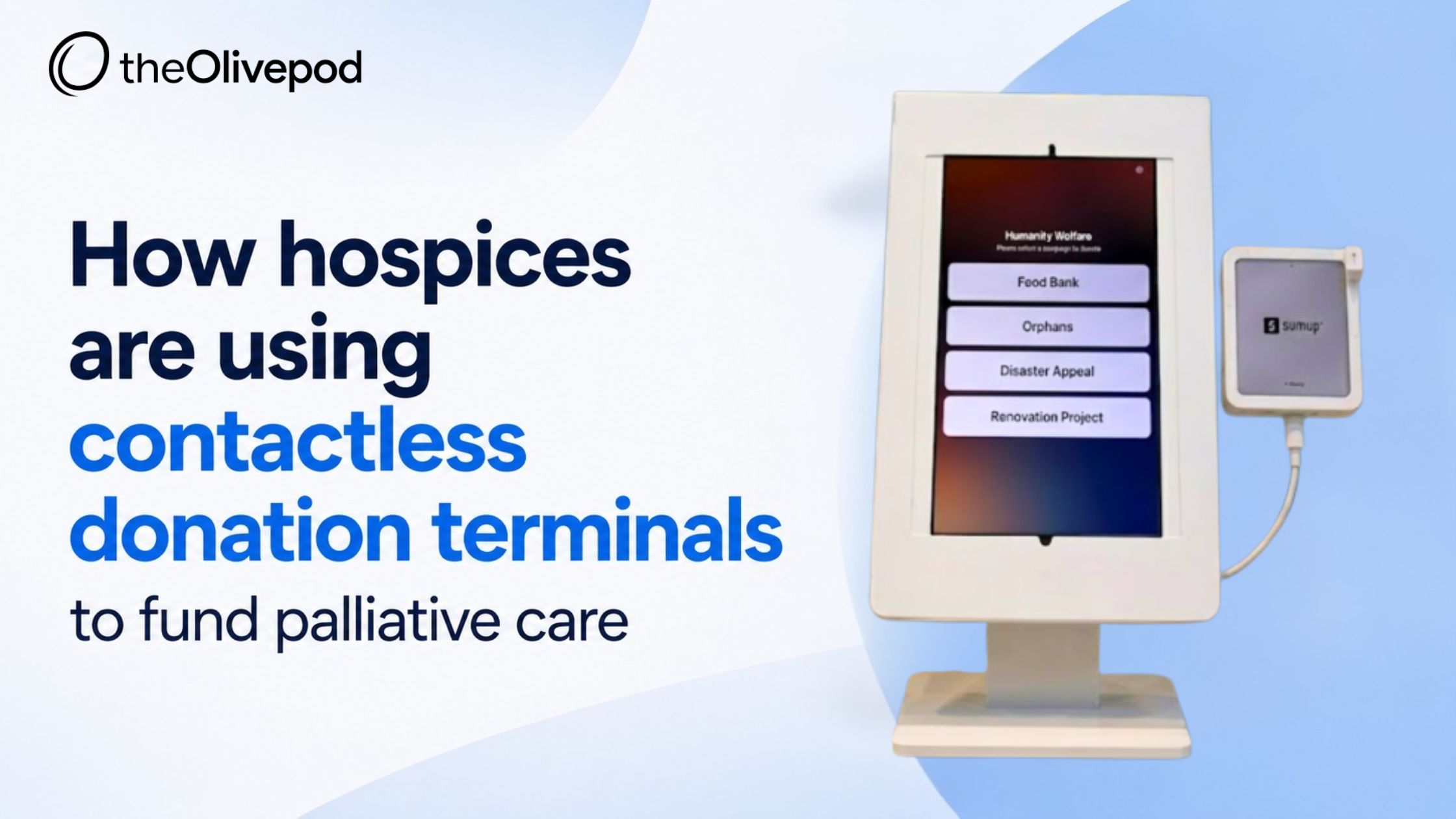
A contactless donation terminal is a small, secure device that allows supporters to make donations by tapping a bank card, phone or smartwatch. Donors can select a donation amount on screen, tap once, and complete the transaction within seconds. The process requires no cash, paperwork or queue. Supporters can complete their donation in seconds.
There are various types of contactless donation solutions. Fixed terminals can be permanently located in hospice receptions, day centres, chapels and charity shops. Mobile card readers can accompany fundraising teams to community events, memorial services and Light up a Life events. QR codes on posters, service sheets and other printed materials can provide another way for supporters to donate using their phones.
The right combination will depend on the hospice, its fundraising activities and where supporters are most likely to give.
How are hospices actually using these terminals day to day?
In reception areas and family lounges, terminals can be placed close to the doorway, capturing donations at the point when gratitude may be felt most strongly, such as when a family has finished a visit.
At hospice charity shops, customers paying by card can be encouraged to make a small round up donation at the checkout, creating a consistent source of additional revenue.
During remembrance and fundraising events, mobile terminals can be used across memorial gardens, at Light up a Life evenings and during sponsored walks. Volunteers can collect donations without handling cash or having to count collection buckets at the end of an event.
In chapels and quiet rooms, low profile and discreet terminals can enable reflective giving without making people feel uncomfortable about searching for loose change.
Through in memoriam appeals, QR codes on service sheets and condolence cards can give mourners another way to make a direct contribution, often as an alternative to sending flowers.
Do contactless terminals really increase hospice donations?
There is growing evidence that contactless giving can provide a valuable source of additional charitable income. For example, Give A Little reported an average donation of £10.24 in 2023. This applied to card-present contactless and Chip and PIN donations made through its platform. The platform also reported £14.3 million in cashless donations during the year. Charities using Gift Aid on their campaigns received an additional £765,280 in Gift Aid income.
Other contactless fundraising initiatives have reported similar results. Tap for Change reported an average contactless donation of £6.15 across 16,250 charitable donations during a three month period.
These figures suggest that contactless giving can help charities capture donations from people who may not be carrying cash. It can also make it easier for supporters to choose a set donation amount rather than relying on whatever loose change they have available.
Another major obstacle is the lack of cash available to give, which terminals can remove. Most visitors to a hospice are likely to have a card or phone with them, meaning the pool of potential donors can include everyone who enters the building rather than only those carrying cash.
Recurring giving is another potential advantage. Some modern donation platforms can encourage supporters to move from a one off donation to a regular monthly gift. For hospices, this can help turn a single donation into a longer term source of income that can support future planning.
How does Gift Aid work with contactless giving?
One of the strongest arguments in favour of going digital is Gift Aid. UK charities can claim an additional 25p from HMRC for every £1 donated by an eligible donor, provided the relevant Gift Aid requirements are met.
Gift Aid can also apply to certain small contactless donations through the Gift Aid Small Donations Scheme. Eligible charities can claim on contactless card donations of £30 or less collected on or after 6 April 2019, subject to the scheme’s conditions and limits.
Digital donation platforms can make Gift Aid capture easier by incorporating the relevant donor declaration into the giving process. This can help charities collect the information they need and reduce the administrative burden associated with paper based donations.
For a hospice raising £100,000 through eligible donations, Gift Aid could potentially add a significant amount to the total raised. The exact amount will depend on donor eligibility, the type of donations received and whether the relevant Gift Aid requirements are met.
What should a hospice consider before installing terminals?
Begin by identifying your busiest fundraising locations. Reception areas, charity shop checkouts, events and chapels tend to perform well. Where you place the terminal is often more important than the number of terminals you have. A good terminal in the right location can perform better than multiple terminals in unsuitable locations.
Consider what supporters see on the screen. Keep the message clear and specific. Explaining what a £20 donation could help provide may be more compelling than a generic appeal. Look for platforms that allow you to update campaigns remotely, so you can change seasonal appeals and memorial campaigns without having to visit each device.
Review the total cost, including hardware, monthly fees and transaction costs. Make sure the provider is PCI and GDPR compliant, offers real time reporting, and accepts Apple Pay and Google Pay as well as standard bank cards. Flexible contracts are also important, particularly for smaller hospices that want to test the approach before making a larger commitment.
Is contactless giving suitable for sensitive hospice environments?
This is a reasonable concern, and careful implementation is essential. Places of grief, such as hospices, should never feel intrusive when it comes to fundraising. Well designed terminals are discreet, silent and entirely optional. They can be branded to suit the identity of the hospice and provide a simple way for people to give if and when they choose to do so. A simple and dignified giving option requires no staff involvement and puts no pressure on grieving families.
What can theOlivepod offer hospices?
While the basic purpose of a contactless donation terminal is to make giving easier, some platforms offer additional fundraising tools designed to help charities manage multiple donation channels.
TheOlivepod brings fixed contactless terminals, mobile readers, QR codes and online giving together through a single dashboard. This gives hospices a way to manage different fundraising points from one place rather than relying on separate systems.
Depending on the setup, hospices can use theOlivepod across different fundraising locations. These include reception areas, charity shops, events and remembrance services. This makes it easier for supporters to donate wherever they choose.
TheOlivepod also allows hospices to manage campaigns remotely. They can update terminal messages for seasonal fundraising, memorial campaigns or other appeals. There is no need to update each device individually.
For hospices considering contactless fundraising, it is important to look beyond the terminal itself and consider the wider platform. Features such as reporting, campaign management, Gift Aid support, smart donor recognition, mobile giving and online donations can make a difference to how effectively the system fits into the hospice’s wider fundraising strategy.
Conclusion
Contactless donation terminals offer hospices a practical way to respond to the decline of cash. They can help hospices capture more donations, support Gift Aid capture, reduce volunteer administration and allow donors to give at the moment they feel most motivated to do so. That can make a significant difference for organisations providing palliative care with limited budgets.
For hospices looking to modernise their fundraising, solutions such as theOlivepod can bring different giving methods together in one place. By combining fixed terminals, mobile readers, QR codes and online giving, hospices can make it easier for supporters to donate while keeping fundraising simple for staff and volunteers.