
How can charity shops maximise fundraising through modern payment solutions?
Running a successful charity shop is not only about filling shelves with donated items; it is also about taking a fresh approach to fundraising. Contactless donations are becoming an important fundraising innovation for charities across the UK. As the UK becomes increasingly cashless, charities need donation methods that match how people prefer to pay today. Whether you operate a single high street charity shop or multiple locations, modern fundraising tools can help increase donations while staying true to your charitable mission. This guide explores practical strategies that can help charity shops maximise fundraising opportunities.
What are the key fundraising strategies for modern charity shops?
Fundraising for charity shops is more than just hoping that people will put spare change into collection tins. The most successful charity shops are:
• Offering contactless donation options that match modern customer payment preferences.
• Creating engaging in-store opportunities that encourage spontaneous donations.
• Using digital marketing to increase foot traffic and awareness.
• Building partnerships with local businesses and community organisations.
• Encouraging repeat support through loyalty initiatives where appropriate.
• Sharing supporter stories and real fundraising impact to build trust.
How do contactless donations work in practice?
Contactless donations for charities represent a major change in the way UK shoppers give money. In addition to traditional methods such as cash donations or standing orders, contactless technology enables customers to donate securely using their card or mobile device.
Here’s what this looks like in practice:
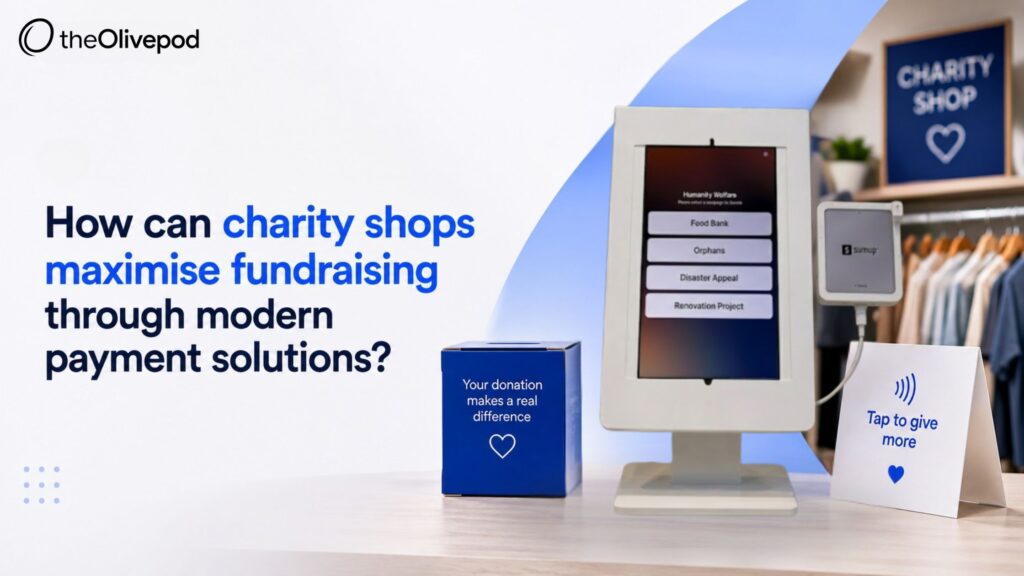
• Customers approach a contactless donation terminal, where they see your charity’s name and cause.
• They simply tap their contactless card or digital wallet (such as Apple Pay or Google Pay).
• The transaction is completed in seconds, with no cash handling involved.
• Donations are processed securely through your payment provider.
• Customers receive instant confirmation that their donation has been processed.
The great thing about this system is that it removes barriers from the donation process. Many charities report that offering contactless donations makes it easier for supporters to give when they are ready.
Why should charity shops prioritise digital payment solutions?
Consumer payment habits have changed significantly in recent years. Cash is becoming less common, and many shoppers no longer carry it regularly. However, many charity shops continue to rely on cash donations, a method that is increasingly out of line with how consumers shop today.
The benefits of contactless donations for charities include solving several important challenges:
Adapting to changing customer habits: Younger generations rarely carry cash and are more accustomed to digital payment methods.
Lowering operational expenses: Digital payments reduce cash handling and the time required to manage donations.
Increasing the value of each contribution: Contactless payments can help remove barriers to giving and may encourage more spontaneous donations.
Improving transparency: Digital records provide a clear audit trail for reporting and reconciliation.
Increasing safety: Holding less cash on-site can help reduce security risks.
Streamlining administration: Automated systems mean less manual counting and reconciliation.
How can you choose the right contactless donation provider?
It is important to choose a contactless donation provider carefully. Seek out providers that are knowledgeable about the charity sector and provide:
Charity-specific pricing: Some providers offer pricing designed specifically for registered charities.
Seamless integration: Look for systems that integrate well with your existing fundraising or retail setup.
Reliable support: Choose providers that offer client support with a strong understanding of the charity sector and its challenges.
Transparent reporting: Clear dashboards that demonstrate donation trends and patterns.
Scalability: Solutions that can scale across multiple branches.
Easy staff training: Simple systems that are easy for employees to learn and use.
Several providers offer contactless payment solutions designed for charities, and packages are available specifically for not-for-profit organisations. When comparing options, consider transaction fees, set-up costs, ongoing support quality and the system’s functionality for your particular business needs.
What additional fundraising tactics complement contactless technology?
Contactless donations work best when combined with other fundraising and engagement strategies.
In-store initiatives:
• Set up “donation stations” at tills with strong, clear messaging about your cause.
• Encourage staff to casually remind customers about donation options when checking out.
• Share impact stories that show how donations create real and tangible change.
• Implement regular campaigns aligned with national awareness weeks and fundraising campaigns.
• Make donation opportunities clearly visible without being intrusive.
Community engagement:
• Co-organise fundraising events with local schools, offices and organisations.
• Conduct in-store events and presentations about your charity’s work.
• Work with local personalities and community figures to sponsor your events.
• Create a “Friends of [Your Charity]” programme offering exclusive benefits and recognition.
• Work with local media to raise awareness of fundraising campaigns.
• Encourage supporters to share your fundraising campaigns and community impact on social media.
How can staff support contactless fundraising?
Your team still plays an important role in maximising fundraising success. While contactless donation systems reduce manual donation handling, staff awareness and engagement can help customers understand how and where they can support your cause.
Staff can support contactless fundraising by:
• Clearly explaining where donations go and the real-world impact they create.
• Explaining donation options confidently and thanking supporters for their generosity.
• Respecting a donor’s decision if they choose not to donate.
• Celebrating team achievements and recognising successful fundraising efforts.
Regularly reporting on fundraising progress helps support your charity’s activities. Ensure staff understand how donations support your charity’s work and feel confident discussing it with customers.
Looking to introduce contactless donations in your charity shops? Explore how theOlivepod contactless donation solution can help make giving easier for supporters.
Final words: Building a sustainable fundraising future
The world of charity shops is changing quickly. Charity shops that succeed combine strong community values with modern fundraising technology such as contactless donations. Every donation helps your charity continue making a positive impact within the community.
If you need to start small, do so. Even with a single contactless payment device, you could make a significant difference to your fundraising. Ensure staff are well trained, make regular customers aware of the changes and monitor the results. This can help create more opportunities for donations and may increase the average donation value.
Keep in mind that every pound you raise through effective fundraising efforts can have a direct impact on your charitable mission. It is not only good business, but also a step towards creating positive change in your community.
Frequently asked questions about contactless donations for charity shops
Q: Is contactless technology expensive to implement?
A: Setup costs vary depending on the provider and many offer solutions designed specifically for charities. Speak directly with providers to find the right option for your budget and branches.
Q: Will introducing contactless payments alienate older supporters?
A: No, as long as traditional donation options remain available. Many charity shops continue to offer both contactless and cash donation options, allowing supporters to choose their preferred payment method.
Q: How soon can charities see results after introducing contactless donations?
A: Results vary depending on factors such as footfall, promotion and supporter engagement. Many charities begin seeing improvements once supporters become aware of the new donation option.
Q: Is there a way to incorporate contactless donations with loyalty programmes?
A: Some fundraising platforms can integrate with supporter engagement or CRM tools, depending on the provider. They may also support features such as digital receipts and donation tracking, creating a smoother experience for customers.
Q: What if some supporters still prefer to donate with cash?
A: That is completely fine. The aim is to provide options. Some supporters will always prefer cash, and respecting their preferred payment method helps maintain their connection with your charity.