
Contactless donation terminal guide
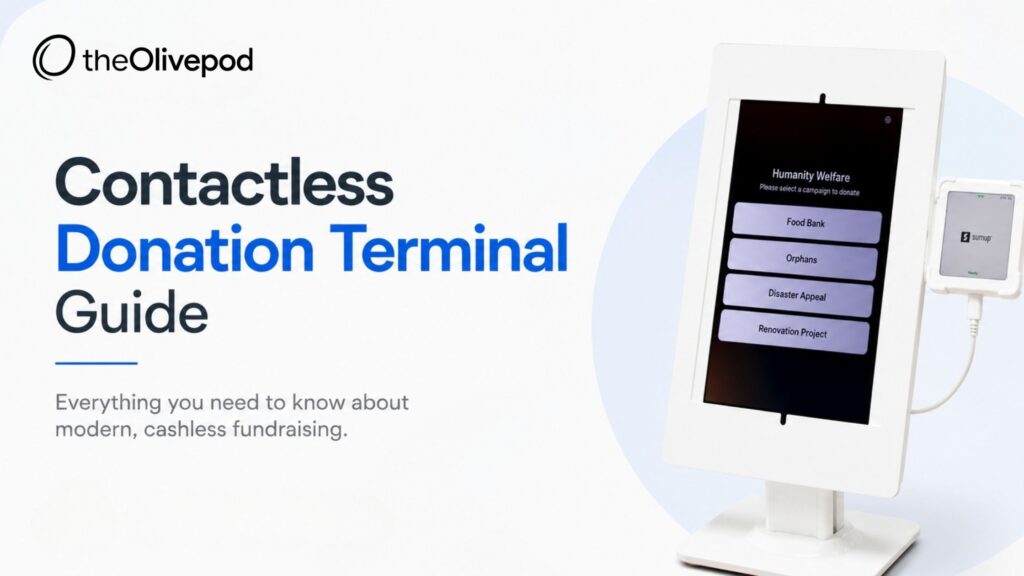
Contactless donations have changed the way people support charities across the UK. Instead of relying on cash, donors can now give using contactless bank cards, mobile wallets and QR codes, making donations quicker and more convenient. As fewer people carry cash, charities are increasingly introducing contactless donation terminals to make giving easier wherever supporters choose to donate. Whether at fundraising events, charity shops, churches or visitor attractions, contactless technology helps organisations accept donations securely while meeting the expectations of today’s donors.
If you run a charity, church or not for profit organisation, understanding how contactless donation systems work can help you reach more supporters and increase fundraising opportunities. This guide explains how contactless donation terminals work, their benefits and what to consider when choosing the right solution.
What are contactless donations and how do they work?
Contactless donations allow people to support a charity or organisation without using cash. Instead, donors can give instantly using a range of digital payment methods, including:
- Contactless bank cards (Visa and Mastercard)
- Mobile wallets such as Apple Pay, Google Pay, and Samsung Pay
- QR code payments that link directly to a donation page
- Text-to-donate services using SMS
- Online donations through a website, donation form, or Donate button
Each method is designed to make giving as simple as possible. A donor can tap their bank card, scan a QR code or use their smartphone to complete a donation in just a few seconds. There is no need to carry cash and the entire process is secure, quick and convenient.
Why should charities embrace contactless payment systems?
The benefits of going contactless
As fewer people carry cash, offering contactless donations helps charities, churches and not for profit organisations make giving simple, secure and accessible. Modern payment technology removes barriers to donating while reducing the need to handle cash.
Key benefits include:
- Higher donation rates – Supporters are more likely to donate when they can simply tap their card or phone.
- Increased average donation value – A quick and straightforward payment process can encourage larger donations.
- Improved security – Cashless donations reduce the risks associated with handling, storing and transporting cash.
- A better donor experience – Contactless payments provide a fast, familiar and convenient way to give.
- Real time reporting – Donations are recorded instantly, making it easier to monitor fundraising performance and reconcile transactions.
- Greater accessibility – Supporters can donate using contactless cards, smartphones or smartwatches, allowing more people to give in the way they prefer.
- Improved hygiene – Less cash handling creates a cleaner donation experience for both donors and volunteers.
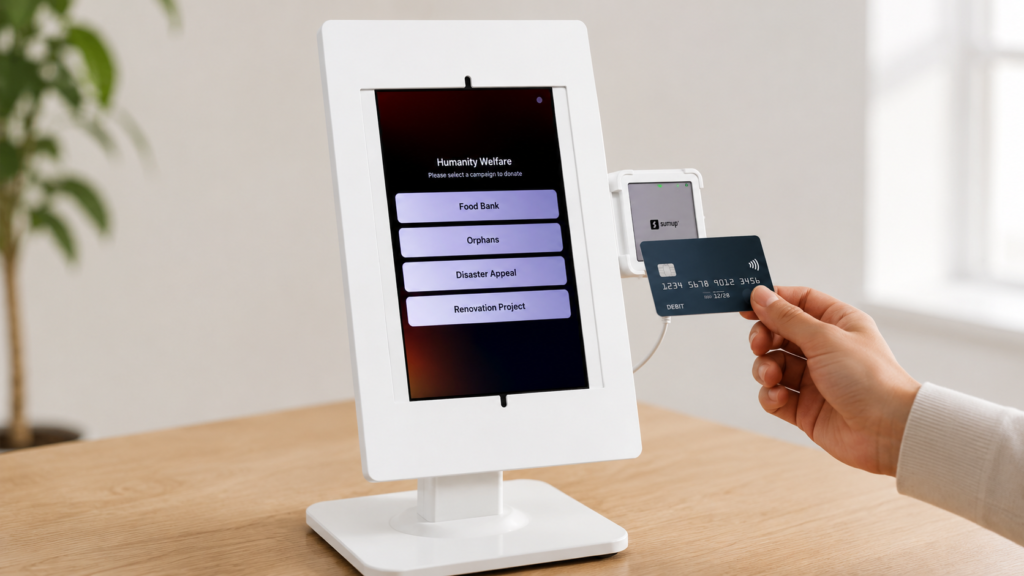
How contactless payments encourage more donations
Removing friction from the donation process makes people more likely to give. When supporters can donate with a quick tap of their card or smartphone, they are less likely to abandon the decision because they do not have cash or need to search for change.
Contactless technology also supports impulse giving. Someone attending a fundraising event, visiting a church or browsing a charity shop can make a donation in seconds without interrupting their experience.
Offering familiar payment methods helps charities connect with a wider audience, particularly people who rarely carry cash and prefer to pay using contactless cards or digital wallets. By making donations quick and convenient, organisations can encourage more people to support their cause.
What do you need to set up contactless giving?
Getting started with contactless donations is straightforward. Most charities can begin accepting donations with just a few essential components.
Contactless donation terminal
Choose a contactless donation terminal that accepts major debit and credit cards as well as digital wallets such as Apple Pay and Google Pay. Some terminals also support fixed donation amounts, custom branding and QR code donations.
Payment provider
Your terminal will need a payment processing provider to securely process transactions and transfer funds to your organisation’s bank account. Compare providers based on transaction fees, reporting features, ease of use and customer support.
Internet connection
Most terminals use WiFi or mobile data to process payments. Some models can temporarily store transactions if the connection is lost and automatically upload them once service is restored.
QR codes
Adding a QR code alongside your terminal gives supporters another way to donate using their smartphone. This can be particularly useful for posters, outdoor plaques, fundraising materials and charity shop displays.
Staff and volunteer training
Most contactless donation systems are simple to use. A short demonstration is usually enough for staff and volunteers to learn how to operate the terminal and answer basic questions from supporters.
How to choose the right contactless donation terminal
Not all contactless donation terminals offer the same features, so it’s worth comparing your options before making a decision. The right solution will depend on how and where your organisation collects donations.
When choosing a contactless donation terminal, consider the following:
Ease of use
The terminal should be simple for both donors and volunteers to use. A clear display, straightforward setup and intuitive interface help create a smooth donation experience.
Accepted payment methods
Choose a terminal that accepts all major debit and credit cards, as well as digital wallets such as Apple Pay and Google Pay. Some solutions also allow supporters to donate by scanning a QR code.
Fixed and custom donation amounts
Many terminals let you display suggested donation amounts, while others allow donors to enter a custom amount. Offering both options gives supporters greater flexibility.
Connectivity
Most contactless donation terminals connect using WiFi or mobile data. If you regularly fundraise at outdoor events or locations with unreliable internet access, look for a terminal that can securely store transactions until the connection is restored.
Reporting and insights
A good donation system should provide real time reporting so you can monitor donations, view transaction history and track fundraising performance from an online dashboard.
Portability
If you attend fundraising events, community activities or church services in different locations, a lightweight and portable terminal can make collecting donations much easier.
Branding and customisation
Some contactless donation terminals allow you to display your charity’s logo, campaign messages and images. A branded donation screen helps build trust and reinforces your organisation’s identity.
Transaction fees
Compare transaction fees, monthly costs and any additional charges before choosing a provider. Understanding the total cost helps ensure you select a solution that offers good value for your organisation.
The best contactless donation terminal is one that is reliable, secure and easy for supporters to use. Choosing a solution that fits your organisation’s fundraising activities today will also give you the flexibility to grow your contactless giving programme in the future.
Tips for increasing contactless donations
Where you place your donation terminal can have a significant impact on fundraising. Position terminals where supporters naturally pause, such as charity shop checkouts, reception areas, church entrances and event registration points.
Use clear, professional signage so people immediately understand they can donate by tapping their card or scanning a QR code. Short messages such as “Tap to Donate” or “Support Our Cause Today” are often the most effective.
Offer more than one way to give by combining a contactless terminal with a QR code. This allows supporters to choose the payment method they find most convenient.
Where appropriate, display suggested donation amounts such as £2, £5, £10 and £20. Providing a small number of options can help donors decide quickly without feeling pressured.
Final thoughts: digital giving is essential today
Contactless giving helps charities make donating simpler, more accessible and more convenient for supporters. Whether through a donation terminal, QR code or mobile wallet, digital payment technology allows organisations to collect donations wherever supporters choose to engage.
You do not need to launch a large fundraising programme from day one. Start with a single contactless donation point, monitor the results and expand as demand grows.
By choosing the right contactless donation solution, charities can modernise their fundraising approach while creating a better experience for donors.
Looking for a contactless donation solution for your charity?
Get in touch to discuss donation terminals, QR code giving and cashless fundraising options tailored to your organisation.
FAQ
Q1: Are contactless donations secure?
Yes. Contactless donations are processed using secure, PCI DSS compliant payment systems. Transactions are encrypted, and charities do not handle or store sensitive card details, helping to protect both donors and organisations.
Q2: How much does it cost to accept contactless donations?
Transaction fees vary by provider, but charities can typically expect to pay a small percentage fee for each donation. Some payment providers also offer discounted rates for registered charities.
Q3: Can charities identify people who donate using contactless payments?
Standard contactless donations do not usually include the donor’s personal details. Charities receive transaction information such as the donation amount and date. If you would like to collect donor information for Gift Aid or future communications, you can enable a Gift Aid form within your donation campaign, allowing supporters to provide their details after making a donation.
Q4: What’s the minimum donation amount for contactless?
There is no minimum donation amount. Supporters can donate any amount they choose, making it easy to accept everything from small everyday donations to larger contributions.
Q5: How do contactless donation terminals work without an internet connection?
Many modern contactless donation terminals can temporarily store transactions when there is no internet connection. Once the connection is restored, the transactions are processed automatically. Offline functionality may vary between providers, so it is worth checking the features of your chosen terminal.
Q6: Can contactless donation terminals accept Gift Aid?
Yes, although the process depends on the contactless donation solution you use. Because Gift Aid requires a declaration from the donor, many contactless donation systems provide a QR code, text message or online form that allows supporters to complete their Gift Aid declaration after making their donation.
Q7: Where should I place a contactless donation terminal?
Place your donation terminal where supporters naturally stop, such as charity shop tills, church entrances, reception areas, visitor attractions or fundraising events. Clear signage and good visibility can encourage more spontaneous donations.